About Me

My photo
Adalbert is a forum for me, to post ephemera, photography, poetry, occasional travel notes, and various spontaneous motions. Cover photo: Parsonage where my great-grandfather spent his early years. Taken near Liegnitz, Silesia, ca. 1870. The "xothique" portion of the web address is a nod to Clark Ashton Smith's fictional continent of Zothique.

Thursday, February 7, 2013

Dry Images


I have nothing against Canada, waterways, or trees, but these aren't the most dynamic shots possible.  Ansel Adams, step aside!

Thursday, January 31, 2013

The Yomeimon Gate at Nikko


Postcard of the Yomeimon Gate in Nikko, Japan: http://www.nikko-jp.org/english/toshogu/youmeimon.html. No doubt a "delrqhtful" sight. The postcard is from the 1950s.

Wednesday, January 30, 2013

Champollion Dynamite


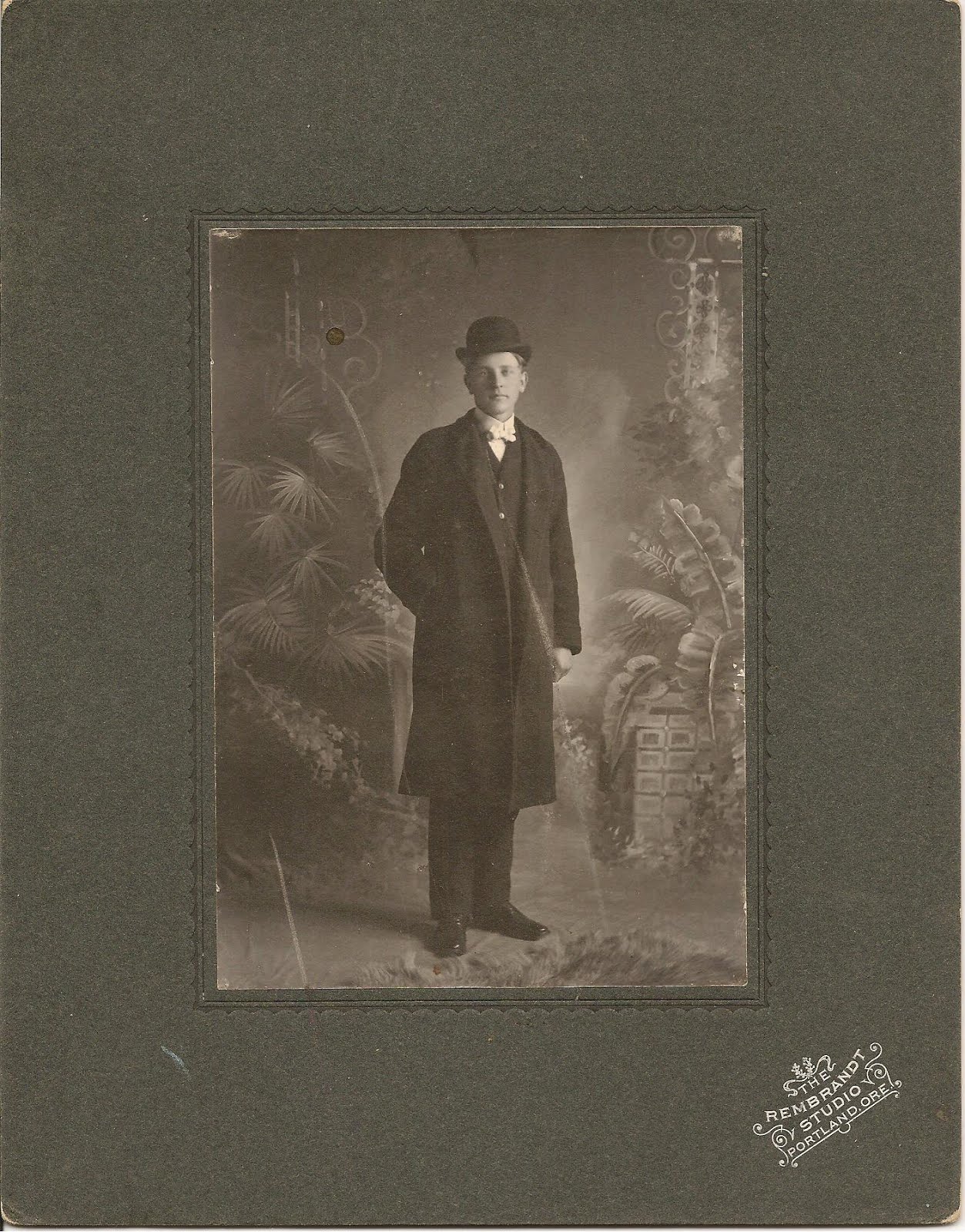
This picture postcard and the photograph came from ancestral sources. I do not know if the people in them are friends of ancestors or actual relatives, or both. The Rosetta Stones which could have decrypted the images are not available. It's always a good idea to label your photographs, or include some kind of note with an explanation at least.

Is it just me, or is there something ambiguous in the photo on the postcard? More than likely it was taken in Missouri. The photo of the young man and woman, possibly also from Missouri, looks particularly old -- it looks to be from the Civil War period or from a little later in the nineteenth century.

Friday, January 25, 2013

Kirby McCauley's Night Chills


A recent re-read was Night Chills (1975), edited by Kirby McCauley, with a menacing cover painting of a guy with three pupilless eyes, a turban, and skin problems, emerging from mist. The horror anthology is a solid sampler of different horror authors. I bought this copy around 1980 at a little used bookstore which was only in business for a few years, in a house a block or two east, I believe, of the location of the two "panorama" photos I took on Pioneer Boulevard in Sandy, Oregon a few years ago. The schoolhouse building was also at one time a laundromat operated by my family from around 1969 to 1981.

Many anthologies from this period include a Derleth/Lovecraft "posthumous collaboration," and Night Chills includes one, Innsmouth Clay, an account of a sculptor, Jeffrey Corey, who has a dash of Marsh blood, and who goes native after moving to the Innsmouth area. I liked it when I first read it, but am not so taken with it now.  As with any of these "collaborations," the level of writing is mediocre. There's a mashup of elements from The Shadow over Innsmouth, with a racy scene as well, and the usual amped up "rustic" eye dialect, but nothing like the symbolism and ecstatically alienated prose in Lovecraft's original work.

Two authors represented in this collection who use Lovecraft for inspiration, but who also use their own powerful voices and imaginations, are Richard L. Tierney in From Beyond the Stars and Karl Edward Wagner in Sticks. I just had the vaguest memory of Sticks from having read it over thirty years ago, but it's a well- constructed story of cosmic witchcraft and necromancy. Wagner showed artistic restraint, making the protagonist, Colin Leverett, a World War II veteran, working this element into the story in an admirably subtle way. Robert E. Howard's The People of the Black Coast is a poetic story of doom and revenge set on an imaginary Pacific Island (which region would become the setting for a different type of horror the decade after the tale was written).  Carl Jacobi's The Face in the Wind is florid and clumsy, but there are many excellent stories in Night Chills, with work by Ramsey Campbell, Dennis Etchison, Ray Bradbury, Walter De la Mare, Mary Elizabeth Counselman, Manly Wade Wellman (whose Goodman's Place is a great example of his Appalachian horror, written with Socratic irony) and others.

Thursday, January 24, 2013

Time Walkers


Thursday, January 17, 2013

Navajo Indians in Northern Arizona


Postcard shewing Navajo women cooking bread, with amazing formations in the background, probably from the 1950s. We are indebted to the Navajos for the part they played in World War II (and to them and other Native American tribes in World War I and other wars besides): http://en.wikipedia.org/wiki/Code_talker.  As with the work done at Bletchley Park, the effort of the Navajo Code Talkers in the Pacific campaign was one of many elements which led to the shortening of the war and to the success of the Allied effort.

Wednesday, January 16, 2013

Internationale Harvester


Some colourful stamps from the USA, a Middle Eastern country, and Cold War Era Mongolia and Hungary, in a space-themed stamp book from the 1970s.

Thursday, January 10, 2013

Saeternesdaeg Night Live

What's the deal with Saturday Night Live anyway?  The night on which William S. Burroughs gave a spoken word performance, November 7, 1981:  http://www.youtube.com/watch?v=fw1U4EJdtgs, (seen in this sketchy Japanese-subtitled video) which I saw on its initial broadcast (and which was immediately followed by a short, parodic film about a French poet, dadaist, literary dog) was for me the highest point of SNL.  The show's toughness as it has lasted for nearly 40 years, its longevity, is remarkable.  I remember when Gunsmoke was cited as an unusually long-lasting show.  Now the goal is to persist for a time at least as long as that from the Ford admistration to the Obama epoch.  The first Saturday Night was broadcast in 1975.  That is a long spectrum of timeliness -- splice in whatever stereotyped image one wants, from the same year of 1975, the last helicopter rising from the Saigon rooftop whilst White Christmas plays, the Watergate crisis recently having ended....

My viddying of this show has been long and complicated.  I have a curious memory of some sort of promotional special about Saturday Night shown a day or two before the first George Carlin-hosted assemblage.  I have a recollection only of John Belushi, as Mussolini or a Mussolini-like figure speaking from a balcony, but can find no record of such a performance (it's possible I'm confusing this with something else).  My watching of SNL has generally been sporadic, from the days of Belushi, Dan Ackroyd, Bill Murray, Gilda Radner, Chevy Chase, Larraine Newman, etc., to the many incarnations since.  Although often uneven, there was a literary and artistic aspect, along with a willingness to risk experiments, in the 1970s and 80s especially, that has for the years since given way to a less challenging approach. 

Another occasional avante garde series from the 1980s on SNL were short films with Andy Warhol (or was it an Andy Warhol double?).


Friday, January 4, 2013

Know Ghoti


Brine Grasses


River music evokes sand, by the ocean's lip seashell sounds Clark.

Same sound curtains sinus, time thousand years ago as now, past.

The sea doesn’t change discernably, magnetic fields cloud the dunes, ley lines compassing solitude. 

The salt boilers of Killamook head, diagonal distance as a sudden mist storm tacks my glasses, hound and yelp screaming, Ceslaus force against the waves.  Eye white juggling columbarium pharos, gossip kelp brink. Good salt in the buckets, no iodine,

mildewed blowhole from nostalgic pelagian, pivot from the slop of bay.
 

 JF

January 4, 2013


Thursday, January 3, 2013

Nicollet Ave., looking South, Minneapolis, Minn.

 
This photo postcard, mailed in 1906, with its oracular "EYES" sign and blend of early automobiles and horse-drawn carriages, pedestrians and bicycles, on Nicollet Avenue in Minneapolis, was addressed to Miss Exel LeDuc of L'Anse, in the Upper Peninsula of Michigan: http://en.wikipedia.org/wiki/Lanse,_Michigan. The pencil inscription next to the photo has faded with the years, but refers to a trip to Minneapolis.

Exel moved to the Northwest sometime after this card was sent, as can be seen in this entry about her and her husband's (George W. Vogel) burial site in Woodbine Cemetery in Rainier, Oregon: http://www.findagrave.com/cgi-bin/fg.cgi?page=gr&GRid=51663608

Saturday, December 29, 2012

Pataphysics Alhazred

 
Onward!

Friday, December 28, 2012

Squeeze Box

Friday, December 21, 2012

Mayan Long Count Calendar/Shortest Day Special

 
Postcard from Shanghai, depicting a poster advertising cigarettes.

Thursday, December 13, 2012

I hope you guys know karate

 
Polaroid of Roman Scott taken before one of the Lovejoy columns (http://pdxstreetartadvocacy.wordpress.com/pdx-street-art-history/), in situ, in 1986 or 1987, taken by NBW. The portrait on the column was juxtaposed for the obvious resonance; it was put on top of one of the Tom E. Stefopoulos mythologically/classical Greece-themed paintings on the now-destroyed, or relocated columns. The area appears in the "home movies" sequence at the start of Gus Van Sant's film Drugstore Cowboy. The three of us walked beneath the Lovejoy street ramp after, no doubt, a movie or event, perhaps a Derek Jarman film. In the night a rent-a-cop approached us and said to us, as a warning about the place, "I hope you guys know karate."

Wednesday, December 12, 2012

Entscheidungsproblem


 Good day my beloved friend, may the peace of gracious God be with you,please I have a problem which I needed a help from you,I have decided to write you for help, My Name is Mr.Ubu. I am writing from Burkina Faso-West Africa. I am a staff of one of the biggest Bank here. I want to wire $10, 300,000.00 (Ten Million Three Hundred Thousand Dollars) that has been abandoned for 12 years in our Branch to your account abroad. The account owner is dead with his next of kin since year 2000. Get back to me for more details if you are interested to receive the inheritance fund.

Best Regards in your family, Entscheidungsproblem

Thursday, December 6, 2012

Dual Reading: Mark Vonnegut's The Eden Express and Richard Bach's Jonathan Livingston Seagull


Time was recent I absorbed Mark Vonnegut's The Eden Express (as in the son of the author of Breakfast of Champions) and Richard Bach's Jonathan Livingston Seagull. The Eden Express I picked up at the unfortunately now-defunct store the Dollar Scholar on Hawthorne Avenue in Portland, for, as eponymy would have it, one dollar, because I liked the cover. My copy of Jonathan Livingston Seagull I got in the "free boxes" that used to be placed outside the front entrance of Powell's City of Books; I picked up the tome around thirty years ago, and never read it until now. The book is rippled, looking as if someone dropped it whilst reading in the bathtub. Again, I associate the two books for no better reason than that I have read them around the same time. I avoided reading JLS from recalling its ubiquity in the early 1970s;  such fads rarely have value, I reasoned.

The Eden Express is prefaced: "The author maintains that all people, places, and events in this book are real and that he has depicted them accurately to the best of his ability. Before drawing conclusions, however the reader is cautioned to bear in mind the fact that the author has spent considerable time mentally unbalanced."

The memoir covers, among other subjects, Vonnegut's periods of mental illness and institutionalization, interwoven with his initiation of a commune in one of the remote parts of British Columbia. The time frame of the book is the late 1960s and early 1970s, along with plenty of references to such things as "The Revolution," "grass," the I Ching, Charlie Manson, Richard Nixon, and so on. In that era, leaving contemporary and conventional life to pursue truth in the backwoods was viewed as a suitable reaction to a culture of insanity. Vonnegut starts by interpreting mental illness with reference to the questionable theories of R.D. Laing, in which schizophrenia was seen as a valid response to a deranged world. Toward the end of the work, he embraces a more modern view of mental illness as biochemical in nature, as he begins to recover. His writing in places is short on descriptive power. There is a use of cliches, as with terms such as "passed with flying colors" (which is used not once, but twice close together).

In reviews of memoirs, one statement often appears: Something to the effect of, this memoir is good, it avoids self-pity. The Eden Express has a sort of hippie self-pity about it, but hey, what's wrong with a little self-pity once in a while? The book is effective both for chronicling a previous time and for its numinously intense and disordered accounts of mental illness.

Jonathan Livingston Seagull is one of the best fictional works about seagulls that I have read. While Bach's style lacks literary qualities, and he is too obviously drawing on aeroplane flight maneuvers for his seagull acrobatics, the book is still a tolerable parable about spirituality and the Bodhisattva idea.

Tuesday, December 4, 2012

Sparrow through the hall

Thursday, November 29, 2012

Interior

 
I entered a few of the words from the inscription on the back of this family postcard photo online and found, as I suspected, that the language, and names mentioned, are Finnish. A Väinämöinen-sent luminiscence washes the room in 1935.

Wednesday, November 28, 2012

Koo-Koo the Bird Girl and Dwarf

 
Postcard depicting Koo-Koo the Bird Girl, noted for her part in Tod Browning's Freaks (1932). I recently re-watched this claustrophic, dark film.

Tuesday, November 27, 2012

Saturday, November 24, 2012

Friday, November 16, 2012

Adumbration


Adumbration
 
 
Bird walking on wings in foam, in the tidal and receding cave. The omens, gusts of moving sand.
 
Fallen brook, ribboned and covered with black tadpoles.  Green-grey, drained leaves, burrs, lava roads.  Away the farm row of beeches, portend horizon winds sounding.  In the mowed fields of alfalfa, two shades walk above with heads edged with gold.
 
One robe grows large in the void grounded by the black-topped building.
 
 
JF late 1980s
 
Photo:  Wroclaw, Poland.  Twilight of the Prussians


Thursday, November 15, 2012

Multnomah Falls

 
Touring car from the 1910s, perpendicular to Multnomah Falls, with an unknown traveler. Not only does the steep ascent to the top of the falls pay off with views, if one keeps going on the trail one will eventually reach the summit of Larch Mountain (a day climb). (Or one can also drive there before the road is seasonally closed.)   From stony Sherrard Point at the top, one can dwell visually on the slopes of Mt. Hood and other mountains, depending on clarity -- but the depths of the Columbia Gorge itself are concealed by the lay of the land.

Friday, November 9, 2012

Sitting Bull and Buffalo Bill Cody

 
This postcard shews Hunkpapa Lakota Sioux leader Sitting Bull and Buffalo Bill Cody in 1885, during a tour of the Wild West, before a studio backdrop typical of the time. Their body languages and miens are opposed to each other.  Buffalo Bill looks upward as if seeing into the future, his hands arranged dramatically, one holding a rifle. Sitting Bull is pensive and his gaze turns inward.  The chief only lived another five years after this photograph was taken.

Thursday, November 8, 2012

Apache War Chief Geronimo


Geronimo as a prisoner of war in Mobile, Alabama, 1890, following the Apache Campaign, .  A few years ago I read his autobiography, which he dictated to S.M. Barrett through an interpreter : http://www.ibiblio.org/ebooks/Geronimo/GerStory.htm  (I read it in a paperback reprint, without photos.)
The autobiography is a dignified and potent work, whether or not it is absolutely complete and accurate.

Friday, November 2, 2012

We see Thibet with the Binoculars of the People

 
The back cover of Hong, 1989.

Thursday, November 1, 2012

Off-site Planchette Storage


Hong, 1989

Friday, October 26, 2012

Content Provider

 
From Hong, 1989

Thursday, October 25, 2012

Party out Back

 
Doug Gilford poem. From Hong, 1989.

Thursday, October 18, 2012

Business in Front


from Hong, 1989

Wednesday, October 17, 2012

Adequately Excellent

Saturday, October 13, 2012

Inside Front Cover, Hong, 1989

I just found John M. Bennett's blog here on blogspot.com:
johnmbennettpoetry.blogspot.com

Thursday, October 11, 2012

Hong, 1989

Wednesday, October 10, 2012

Saturday, October 6, 2012

Parallel readings of Richard Brautigan and Raymond Carver

Last month I read at the same time an old edition of Trout Fishing in America (with its quaint typewriter-like text) by Richard Brautigan and What we talk about when we talk about Love by Raymond Carver.  I had read little or nothing by either author before, although their reputations are inescapable. When I bought the two books together at the king of bookstores, the clerk said:  That's an interesting combination, or something to that effect.

There is no reason to link the two authors, other than I finally felt compelled to read them.  As such things happen, though, they have some parallels and were contemporaries -- both were born in the 1930s and died fairly young in the 1980s, Brautigan at the age of 49 and Carver at 50.  Both were born in the Pacific Northwest.  Both writers used relatively simple language and wrote in a sparing manner. 

Carver -- or Carver's material as procrusteanly edited, at any rate, in the edition I read -- merits his high regard.  At times head-scratchingly truncated -- what the hell happens to the old injured couple?  -- his encrypted glimpses of savagery (as in Tell the Women we're going) and human incompleteness (alcoholism, missing limbs, muteness) are conveyed with the simplest economy.

The famous cover of Brautigan's Trout Fishing in America suggests some of the differences between the two works.  Brautigan and his companion, with their free-form garb, in Washington Square in San Francisco, distill the essence of the counterculture in the late 1960s, when the book was published (whether or not Brautigan was fully on board with the hippies is another issue).  The novel itself was actually written during the Kennedy era and is more of a late Beat Generation or proto- hippie work.  No psychotropic drugs are referenced -- the drug of this book is alcohol.  In contrast with Carver's naturalism, Brautigan uses language in a way that is dreamlike and in places liberated from semantics. "Sandbox minus John Dillinger equals what?"  But Brautigan's writing is suffused with an underlying note of tragedy, as with Carver.  There's always a melancholy along with Brautigan's humor, as when he writes of reading, in Life Magazine, about Hemingway's suicide, anticipating his own.


Friday, October 5, 2012